Babywearing Around The World

Though it may seem like the latest trend in parenting, babywearing has been practiced by parents across the world for centuries. Prior to the early 1900s, parents worldwide used a variety of long cloths, shawls, scarves and even bedsheets to snuggle up their babies and get the chores done.  Mothers in each country or geographical area developed a carrier which was based on their specific needs ranging from the local climate, the type of work to be done while wearing the carrier as well as the carrying position most common to the area.

Babywearing was not something 'special' and different as it is perceived today in the Western world, but just what mothers did to cope. And cope they did!  Mothers had to work incredibly hard and didn't have time to stop and entertain baby, so baby just came along for the ride.  It was common sense for mother to use a baby carrier to make her life a little easier.  

Let’s take a look at babywearing around the globe. It sure is a beautiful tradition! I have created a photo landscape which highlights babywearing both today and throughout history via as many countries and cultures as possible.


Aruba - Anything goes in this island paradise. Babies are worn in many different kinds of slings and wraps, most made from lighter materials due to the tropical temperatures.


Asia (Southern) - In South West China, Thailand, Laos, and Vietnam, mei tais are worn, with either a double or single strap, as are Hmong style carriers which are usually beautifully hand- embroidered. The mei tai originated from China and has been around for centuries. They were used by peasant women while working in the fields.
Laos

Laos
Laos


Thailand


Thailand
Thailand


Vietnam
Vietnam

Vietnam

Southern China

Southern China

Australian Aborigines - When a baby is very small it may lie in a curved wooden dish that the mother holds at her side or lays in the shade of some scrub while she hunts and gathers. During a corroborree it is common that a child is balanced on his mother’s shoulders, fingers clinging to her hair, sleeping as her mother dances.


Australia - Australians typically use a Mbeleko. The word Mbeleko comes from Swahili, literally translated as a sling for carrying a child. This is a typical ring sling made from a wide variety of high quality fabrics.

Borneo - The tribes from Borneo such as Kayan and Kenyah traditionally carry their babies in a rattan plaited carrier. These are decorated with multicolored beaded patterns of dragons, leopards and hornbills. Ancient glass beads and amulets of bear-claws or leopard's fangs add to the spiritual protection of the baby carried within.


Bosnia - A sack like backpack has historically been used. Wraps from shawls and cloths are also common.

Brazil - A traditional wrap sling is used.


Canada - Every conceivable style of baby carrier is available here. Wraps and ring slings are popular as are jacket carriers due to cold climate.


China (rural) - In the more rural areas of China where the inhabitants are used to mountainous terrain, a biandan or shoulder pole is used to carry children. Biandans are used throughout China to carry goods home from the marketplace.

Colombia - A bandolera, a type of ring sling, is used.


Croatia - There are two types of popular baby carriers here. First is a long cloth in traditional prints which is tied on one shoulder and made into a sling. The other carrier is made from a woven netting type of material.
Czech Republic - Historically, women fashion baby carriers out of large baskets. Blankets were laid in the basket to make a “bed like” environment for the child. In rural and lower socio-economic regions, women still carry their babies in these baskets. In the more wealthy areas, women use a type of wrap or ring sling.


Ecuador - Woven or sheet cloths are used on the back. Either a rectangular or triangular piece of fabric is fashioned into a wrap.


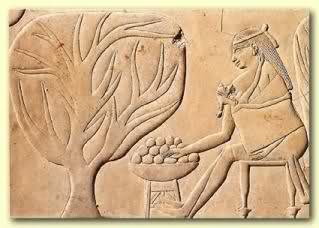
Egypt - Egyptian women who pick cotton in the fields make slings out of dress fabric. The patterns are colorful and bright, and the slings are wide in the middle and narrower at the ends. The women carry their babies on their backs in this way. This is how Egyptian babies have been carried since ancient times.


Ethiopia - Ethiopian mothers use a leather blanket with top straps to carry their babies. They also use cloth wraps.


Fiji - Fijian mothers carry their babies and children in a traditional sarong which is fashioned into a wrap or sling.


Germany - In Germany, a traditional cloak or coat is worn, in which there is a piece of cloth to wrap the baby on the hip.


Ghana - A piece of long, non-stretchy cloth is used to “tie” the baby to his or her mother.


India - In areas where the caste system still applies, some of the lower caste peoples carry their children by tying them into the shawl part of their saris. Apparently, higher caste peoples believe that it is only the lower caste that carry babies.


Indonesia - Pieces of fabric are also tied over one shoulder and are used as baby carriers. These are called selendang slings. They are also worn as a skirt or dress or used to carry things.


Inuit Eskimo Amauti - The amauti is an Inuit Eskimo parka that is used as a child carrier. Amauti are made from a variety of materials including sealskin, caribou skin and thick woolen cloth known as duffle. Though the child appears to be carried in the hood of the amauti, he is actually carried in an enlarged, extended portion of the back of the garment with his belly against mom's back and is secured at the mother's waist with a belt or tie. The child's weight is distributed across the mother's shoulders. The hood is large enough to cover both the mother and child to protect them from harsh winds. The Inuit regard the amauti as a unique item that servers as clothing, art, a childrearing tool and a living tradition.


Japan - Onbuhimos are used, which are a wrap style carrier made from gauze, cotton, or wool, similar to a Mei Tai but with a narrower body style.


Kenya - A rectangular piece of material with a border around it is also used by women and men to carry a baby on the back, as well as to sit on, to carry items on the head, and to protect clothing while cooking. In some parts it is called a kanga, in other parts a pagne, and in coastal region a woven style is called a kikoy. Last century, important Swahili sayings started to be printed on each kanga. Two identical pieces of fabric (called a doti) are usually bought together. An identical pair is sometimes split between best friends. A baby can be tied on using one or two kangas.


Korea - The podaegi is a traditional Korean style piece of cloth torso carrier that is used primarily with baby carried on the caregiver's back. When a podaegi is used, the cloth wraps around both mother (or other caregiver) and baby. The two tails or sashes of the podaegi secure the baby in place and can be tied over the shoulders or in a strapless style above the chest. A podaegi can be used from infancy through toddlerhood; however, it is best to wait until infants are at least 4 to 5 months old and can control their heads well while also having good neck strength before using this style of carrier.


Madagascar - A colorful Lambahoana is the typical cloth tied into a baby carrier.


Malaysia - Baby slings are fashioned from a sarong.


Mali  - A long piece of muslin weight (or heavier) cloth is fashioned into a Burkina pack. The baby is bundled in a little pouch on the mother’s back and the cloth is wrapped around and tied securely across the mother’s breasts.


Mexico and Guatemala - The Mexican or Guatemalan Rebozo is a cloth shawl that is worn by both women and girls for a variety of reasons. The rebozo is worn to keep warm or to shield oneself from the rays of the sun. The shawl is also used to carry things whether it is a baby or a few items from the market. A rebozo is a simple piece of cloth style carrier that can be tied in a variety of ways to provide different carrying positions. There are four common carries used with the rebozo style carrier. They include a newborn wrap, a three month old wrap, a toddler wrap for cold climates and a toddler wrap for warmer climates. Rebozos are also used during pregnancy to reposition the baby and during birthing to help support the mother in various positions.
 

Mexico


Gautamala

 
Morocco - Mothers here use a scarf, similar to a Moby wrap but shorter in length and wider in width. They tie the knot in the front over their breastbone and spread the fabric over the shoulder, similar to a ring sling or pouch. They put every sized baby in there like that.


Mozambique - A Capulana is used, which is a printed piece of cloth used for baby carrying as well as carrying other things or as a piece of clothing. For carrying babies it is tied over a shoulder and knotted between the breasts (like a sling). The baby sits on the back.

Myanmar - A "Hmong"-style carrier is used, with a square of fabric similar to a podaegi but narrower. The baby is worn in front or on the back.

Namibia - Babywearing here involves the baby being on the mom’s back while she works at making meals or other tasks. There are no such things as diapers for them so when he poops on the mom’s leg she just wipes it off with a corn husk. Rather elaborate framed packs for the back are common. There is a little sitting area lined with dried plant materials for the baby to sit on. Leather packs are common
as well.


New Zealand - Maori women carry their babies in a cloth inside their cloaks, or in a flax Pikau (backpack). Traditional slings and wraps are used as well.


Nigeria - Women wear mud cloth wraps as their primary clothing and simply wrap the baby on their back.


Pakistan - A long piece of dyed muslin cloth or a long scarf is fashioned into a wrap which is tied around the mother’s waist. The extra material serves as strong protection against the sun and meets the country’s modesty requirements.


Papua New Guinea - Ipili people use a net bag called a bilum to carry their babies. They are carried with the strap around the forehead of the mother and the baby in the bag carried on the front or back. A bilum is a bag available in many sizes and used for carrying many different things. The bag is lined with soft leaves or pieces of cloth to make it more comfortable for the baby.


Peru and Bolivia  - A Manta or Awayo has been traditionally worn. This is a large rectangle of woven fabric folded in half and tied in a knot at the mother's chest. The baby is carried on the mother's back.

Bolivia

Peru

Peru

Peru

Philippines -
Woman wear a wrap called a "patadyong." The patadyong is a very colorful woven textile that is most commonly seen in plaid.


Poland - Polish women prefer Natiwraps which are a high quality stretchy fabric wrap. Historically, Polish women used long pieces of flannel or cotton.


Portugal - Many different styles of baby carriers can be found.


Russia - A short piece of cloth like a rebozo is used.


Scotland - Scottish women traditionally use their plaid to carry their babies. It is fashioned into a pouch style wrap. They also use a vest style carrier in which the baby is perched on their back in a cozy coat pouch.

Slovakia - Babies have been worn in a heavy shawl or blanket which is secured in a criss cross along the mother’s front and tied under the baby’s bottom as he or she perches on mother’s back.

South Africa  - A piece of cloth is again used. Babies are tied onto the back with the cloth tied on top of the breasts, but straight around the back rather than over the shoulder.


Sweden - The Swedes traditionally carry their children in a "bog" or “boeg”. It is made of leather and shaped into a rounded bag with edges and straps that are cut into traditional patterns. The baby is wrapped in something warm, then placed in the bog. Modern Swedes use a front pack carrier.


Tahiti - A Pareo is used. This is a rectangular piece of printed cloth that is also used as a wraparound skirt.


Tibet, Nepal, Indian Himalayas -
Children are highly revered and babywearing is well practiced. The types of carriers worn varies, with some quite intricate in design and worn on the back, to others made from animal skins and worn as a sling. From front, to back, to hip, the Tibetans are well skilled at using this tool to free their hands to carry on their everyday duties. Wraparound carriers are often used, generally of a single color; fuchsia colored ones seem popular in Lhasa. The fabrics used range in thickness from very thin to very thick.


Nepal
Nepal

United States - Parents and caregivers in the United States employ a variety of methods when babywearing. Everything from mei-tais to ring slings to Moby Wraps, to Becos and Ergos to hiking backpacks can be found with children of all ages nestled inside. Instead of searching for photos to illustrate babywearing in the United States, I am opening this up to my readers! Email me photos of you wearing your children to hybridrastamama [at] Hotmail [dot] com by the end of April. I will publish them in a special post in May.


Wales - In Wales, long pieces of fabric and shawls called 'Siol Fagu' (nursing shawl) are used to carry babies.


We must not forget the babywearing traditions of indigenous North American peoples!
Cradle boards were used by many Native American and Canadian cultures. Babies from birth onwards were wrapped up and then put into the cradle board which was then strapped to the wearer’s back, like a backpack. Cradle boards were also hung from the pommel of a saddle when travelling.


Not all indigenous North American peoples used cradleboards to carry their babies. Long pieces of woven cloth were also used by many peoples for back carries. Sacagawea, Lewis and Clark's early 19th-century Shoshone guide to their exploration of North America, was six months pregnant when she set off. She gave birth along the way and carried her baby for the rest of the journey. When the U.S. Mint researched Sacagawea for their Golden Dollar coin, in production since 2000, they determined that "she could reasonably have learned to carry Jean Baptiste slung from her shoulder, as was the Hidatsa custom." The final design of the coin shows the infant nuzzled into the back of her neck as she looks back over her shoulder at the viewer, the baby sling a prominent part of the design.

Here are a few more photos from around the globe that caught my eye!

Angola (Africa)

Senegal (Africa)

North Togo (Africa)

Botswana (Africa)
Central China


France


I hope you have enjoyed the beauty that is global babywearing. This was a wonderful post to assemble and I admire mothers (and other caregivers) in every culture who keep their babies close, be it out of necessity or for the bonding and developmental needs of their baby.

Stay tuned for part two….Babywearing Daddies!

Yours in the beauty of babywearing,
Jennifer


Photobucket

20 comments:

Wolfmother said...

Loved this! It is awesome to see all the different cultures that practice baby-wearing since it has been a lifesaver for me personally. This makes me want to try out different ways to tie my own wrap with my son.

Kat said...

Wonderful pictures! It was so great to see all the many different types of carriers and ways to babywear. Thanks for putting this together!

(I especially love the very last picture, of the mother, at what seems to be her work, wearing her baby! So cool! I wonder what country that's from?)

Zoie @ TouchstoneZ said...

Wonderful post! I just love all the photos of various babywearing mama-baby pairs (and multiples) and the different carrier-styles. I appreciate all the work you put into this post, too. Thank you for sharing it!

Painting Intimate Moments of Motherhood said...

wow beautiful! Thank you so much for sharing ~ a couple of these will certainly inspire a painting :)

Rae said...

great photos! when my son was born, i didn't give babywearing a second thought...it just seemed so natural to me. i was surprised to find out that many people don't wear their babies...what a shame...

Kimberly {YeP, they are all mine} said...

mothers are amazing.

Brianna Graber said...

Oh, it is beautiful! Thanks for checking out my blog and directing me here. :-)

One Rich Mother said...

Oh wow. I cant even think of how much work this must have been. what an amazing resource! Great, great, great job.
My grandmother has a traditional cradle board hanging on her bedroom wall. I have always loved it, they can be sooo pretty.

Natalie said...

AMAZING work! I'm reposting! ;)

Natalie said...

LOL! That was "amazing". ;)

Carrie said...

I came across your blog while searching the internet for something to share with friends on Facebook regarding babywearing. I love the variety of pictures/methods you have included in this post. Thank you so much for sharing :-)

BabyMumma said...

I loved the post, it was fantastic. Only one small comment though, the picture under 'Australian aborigines' is not an Australian aborigine woman I think :-S

Kelly said...

Gorgeous post Jennifer! My first experience with babywearing was in Mexico - I was so in awe of those moms! It was a thrill to me to learn how great it is for our little ones (and us) and to know that I could do it, too! :D

Thank you for sharing these - Gave me such a happy start to my morning!

Mama Violet said...

Love this!

Hybrid Rasta Mama said...

I am just so pleased that this post is still being shared! I cannot wait to reveal part two...stay tuned! It coming on Father's Day and might be something to share with the daddy in your life!

Anonymous said...

This is amazing! I stumbled upon it when trying to find instructions or a video/ demonstration on how to tie a long scarf to carry a baby. Many great pictures of this out there but do you have any idea wear I could find a demo? I'd love to see it!!! [ theriffers AT gmail.com ]
thanks for sharing!
Michelle

Jess said...

Oh my goodness. The second to last whe the baby is on her head. Mayhap I need to do that for my posture issues ;) and the last where she is at work...awesome. I'm going to look for Romania and Norway just to see what's in my heritage.
Also, the third from last is that crochet? Cause I crochet. Hmmmm.
The ones where older siblings (still babies to me) are carrying their siblings, I assume (hope), just melt/break my heart.

BabyCalm Corinne said...

A beautiful collection of photos! Makes me want to travel the world collecting more slings :)

For the New Zealand photos....
I *think* the first mama with the blue ring sling is called Esther & makes slings (Keoni Slings).
I don't think the second photo represents New Zealand - either Maori, European, or Pacific Islanders. The traditional attire reminds me of Mongolian people.
Here are a couple of links to Maori babywearing:
http://www.slingbabies.co.nz/Site/History_2.ashx
https://www.facebook.com/media/set/?set=a.10150289984470977.378285.103469350976&type=3
http://blog.babesinarms.com.au/category/babywearing-around-the-world/

Best wishes

PALS said...

Great pics, I feel I do have to make a point about the pictures from Nigeria, it says the primary clothing is mud cloths. Nit only do we wear regular clothes, we wear cloths that are called 'wrappers' but they're not mud cloths! I think mud cloths are more Associated with Malian culture.

Anonymous said...

i really enjoyed this blog . thanks

Related Posts Plugin for WordPress, Blogger...