Chakras are the sacred centers within that carry us on our journey toward greater awareness and aliveness. As the architecture of the soul, they provide an important map for our wholeness and transformation, both personally and globally. As an ancient spiritual system, they show the path to enlightenment and integration.
The word chakra is Sanskrit for wheel or disk and signifies one of seven basic energy centers in the body that correspond to nerve ganglia branching out from the spinal column, as well as states of consciousness, developmental stages of life, archetypal elements, body functions, colors, sounds, and much, much more. Together they form a profound formula for wholeness and a template for transformation.
Understanding Chakras can provide a profound mirror to the stages of child development.
Let’s dive into this simple guide to chakras for kids!

Looking at child development through a lens of the Chakra system can provide parents with some rather important insight…insight that most parents are not exposed to. You might be surprised how closely related the Chakra is to attachment parenting and gentle/peaceful parenting. There are also a lot of Rudolf Steiner undertones as well.
Interestingly enough, understanding the Chakras can help if your child has any sensory processing issues or a myriad of other health (emotional and physical) issues. Based on your child’s age and “issue” you should easily be able to tap into the effected Chakra to bring about better balance, awareness, and healing.
Explaining chakras to kids can be a bit tricky because we adults like to complicate our explanations. However, you don’t need a special children’s guide to chakras (although I will link to a few cool books at the end of the post). Children naturally know how to open chakras as they are more intuitively connected to them. it doesn’t hurt to support chakras with some healing crystals and essentials oils though.
I have broken each section about chakras for kids into digestible parts.
Each section includes the following as it relates to each chakra:
- A basic introduction

- Signs of deficiency
- Signs of excess
- Emotional issues
- Health issue related to imbalances
- How parents can support their child in each chakra and during the transition to the next chakra
- Supportive healing crystals
- Supportive essential oils

A quick word about essential oils. There are many options for each Chakra but I am only listing essential oils that are safe for children. Please, before using any essential oil on your child, research whether they need to be diluted in a carrier oil. The essential oils listed are safe to diffuse but may not be pet friendly. Again, please do your research. The essential oil brands I personally use and trust are Plant Therapy (they have a kid safe line) and Rocky Mountain Oils.
This is a looooong post. As such, you will find a table of contents to make it easier to navigate to a specific chakra should you so desire. I am starting at the bottom of your spine (your root chakra) and working up to the top of your head (your crown chakra).
Also, be sure to grab my super cool Chakra coloring book at the end of this post. You can download it and print it for your child to enjoy.
Chakras and Child Development
Root Chakra: Muladhara (in Utero to 1 year)
Sacral Chakra: Svadhisthana (6-18 months)
Solar Plexus Chakra: Manipura (18 months – 3 years)
Heart Chakra: Anahata (4 – 7 years)
Throat Chakra: Vishuddha (7 – 12 years)
Third Eye Chakra: Ajna (adolescence)
Crown Chakra: Sahasrara (18 years and beyond)
Children’s Books About Chakras
Printable Chakra Coloring Pages
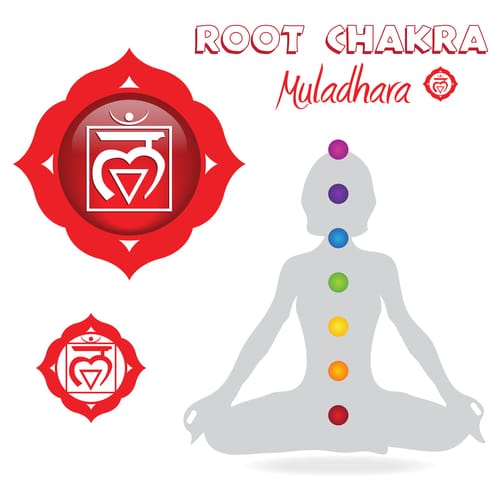
The First Chakra – Root Chakra: Muladhara (earth, physical identity/roots, oriented to self-preservation)
Child Developmental Stage: In Utero to 1 year
The Basics: Located at the base of the spine, the root chakra forms a child’s foundation. It represents the element earth, and is therefore related to survival instincts, and to a child’s sense of grounding and connection to their bodies and the physical plane. Ideally this chakra brings health, prosperity, security, and dynamic presence.
Signs of Deficiency in the First Chakra
- Difficulty maintaining a healthy weight (underweight)
- Feelings of fear, anxiety and difficulty settling
- Difficulty focusing
- Poor boundaries
Signs of Excess in the First Chakra
- Overeating and obesity
- Overly tired
- Fear of change (beyond normal separation anxiety/fear of strangers found in this age)
- High need for security
- Rigid Boundaries
Emotional issues related to the First Chakra
- Inability to feel safe, secure and trust
- Inability to feel settled, to nest and feel safe and connected to home
- Lack of connection with family rhythm and norm
- Anxiety
Health issues that may arise from First Chakra imbalances
- Immune related disorders
- Frequent illness
- Disorders of the bones and teeth
- Disorders of the bowel, anus, large intestine
- Problems with the legs
- Lower back pain and sciatica
- Problems with the base of the spine, buttocks, legs, knees and feet
How Parents Can Support the First Chakra in their Child
1. Promote Embodiment
The most important thing you can do at this stage is to help your child come fully into her body. Frequent touch, holding, carrying, nurturing, and attendance to physical needs cannot be stressed enough. Your touch affirms your child’s physicality. Your holding teaches her to hold herself. Playing with your child helps her develop motor coordination. Playing with her feet and hands, supplying toys she can grasp, playing when she’s in the bath, all help stimulate motor development. Setting up an appropriate environment that is safe and comfortable, with age-appropriate toys helps the child relate to the outer world in a positive way.
2. Establish Trust by Allowing Attachment and Bonding
The child’s only source of safety is through attachment to the primary caregiver. It is important for the mother (or father if he is primary parent) to be there as consistently as possible during the first year as a ground for the child. This means picking her up when she cries, frequently holding and cuddling her, talking to her, protecting her from loud noises, hunger, cold, or discomfort, and feeding her when she’s hungry, rather than by a schedule. Some parents have difficulty allowing this attachment to form, because the child’s natural neediness feels too demanding. Allowing this attachment to occur helps the child become more independent later.
Consistency of presence during infancy helps to reconcile the dilemma of trust vs. mistrust in a way that brings hope and confidence. Knowing that the parent is always there allows the child to relax into the development that needs to occur, rather than rise into tension and hypervigilance.
3. Appropriate Day Care
If the mother needs to work during the first year and can’t be there with her child, she leaves her child at a disadvantage. Unfortunately, financial circumstances often make this the only option. The best parents can do is provide the healthiest child care possible, acting as advocates to make sure the child gets the care she needs. Making sure the child is touched frequently and appropriately, fed on demand, and cared for by competent adults in an age- appropriate environment are a few things the parents can look into when finding day care. Spending time at the day care with her child until she gets used to it is also helpful. Family day care and in-home babysitting are more likely to offer continuity and consistency, when possible. In addition, the mother needs to understand that the child may need extra nurturing, touch, and mother-child bonding in the evening at home. This is especially demanding on single and/or working mothers who are often exhausted at the end of the day. Yet, time taken for nurturing during the first year pays off in the long run with a calmer and healthier child who makes less demands later.
A feeling of safety comes from a safe environment. Peace in the home, protection from loud noises, sharp objects, falling, cold, and violence of adults or siblings is essential. Remember, environment is self to the infant. What they are embedded in is the first influence on who they are.
When a child is in an unfamiliar environment, such as a store, a park, a doctor’s office, or a friend’s house, the parent is an island of safety for the child. Understand that your child will be more insecure, and need to come to you again and again for reassurance.
4. Healthy Nourishment.
Feeding schedules, though convenient for the parent, do not allow the child to establish her own rhythms, nor do they teach her that the world will respond to her needs. Breast feeding has been proven to be healthier emotionally and physically, as breast milk contains important antibodies, and the experience of breast feeding promotes mother child bonding, through physical closeness. But studies have shown that the emotional state of the mother while feeding is actually more important than whether it comes from a breast or a bottle. A bottle given lovingly is better than a breast given resentfully. Healthy nutrition on the part of the mother, refraining from harmful substances that flow into the milk and healthy nutrition when the child begins eating food are also essential to building a healthy body.
If you successfully handle this stage, you will give your child a healthy foundation from which to meet the many challenges that life will bring. She will have a sense of her own body and aliveness, and a sense of hope and optimism that the world can and will meet her needs.
Healing Crystals to support the Root Chakra
The color of the root chakra is red—warm, fiery, and protective. Choosing a crystal or stone in this color family will be beneficial in helping the chakra, so most red stones and some black ones resonate with the root chakra:
- Black Tourmaline
- Garnet
- Obsidian
- Ruby
Essential Oils to support the Root Chakra
Essential oils that are thought of as earthy scents will resonate with this chakra, as will oils that come from root or trunk of a plant:
- Black Pepper
- Cypress
- Fir
- Patchouli
- Spruce
- Vetiver

The Second Chakra – Sacral Chakra: Svadhisthana (water, emotional identity, oriented to self-gratification)
Child Developmental Stage: 6 to 18 months
The Basics: The sacral chakra, located in the abdomen, lower back, and sexual organs, is related to the element water and to emotions and sexuality. It connects children to others through feeling, desire, sensation, and movement. Ideally this chakra brings fluidity and grace, depth of feeling, and the ability to accept change.
Signs of Deficiency in the Second Chakra
- Holding the body rigid
- Frigidity
- Abnormal fear of change
- Lack of excitement and enthusiasm
Signs of Excess in the Second Chakra
- Addiction to food
- Overwhelmed and ruled by emotions (hysteria and wild tantrums)
- motionally sensitive
- Obsessive attachment
Emotional and mental issues related to the Second Chakra
- Issues of control
- Not functioning in daily needs
Health issues that may arise from Second Chakra imbalances
- Health issues related to the reproductive organs
- Disorders of the spleen and urinary system
- Chronic lower back pain, sciatica
- Inflexibility of joints
- Loss of interest in food
How Parents Can Support the Second Chakra in their Child
1. Allow separation and attachment.
Your child will now be in the hatching stage, beginning to separate from you as a parent as his body development allows him more and more movement. Because this is scary to him, he will go back and forth – moving away and coming back to see if everything’s OK. In some ways he will seem even more attached, and this is natural. It is important to support both these movements – to encourage the separation by offering safe opportunities to explore, and by being warm and loving when reassurance is needed.
2. Provide sensate environment.
Your child is exploring the world through his senses. This is his main mode of experience right now. It is important to provide colors and sounds, interesting toys, touch and pleasure through play, and a safe environment to explore. Your voice and attention are a major part of the sensate experience.
3. Support exploration through movement.
Your child wants to move about right now. This is not the time for a playpen, and if you must use one, use it only for short periods of time. Instead, find places where he can crawl and walk about safely, where he can run in the park, roll around in the yard, and learn to use his body in its new found joy of movement.
4. Reflect emotions
Your child is learning his emotional language. If you want to teach emotional literacy, it’s important to mirror his feelings. Be responsive to his cries and expressions of rage, fear, need or confusion. Don’t negate or punish him for his emotions — he can’t help what he feels. Reflect words to show him you understand: “How sad you look right now!” “Are you scared? Do you want Mommy to hold your hand?” Though he can’t speak very well yet, he is beginning to understand words by listening. He will understand that his feelings have a name and that even without language he can communicate to someone what he needs or wants.
Be aware of your own emotional needs and states, as well as the emotional “field” in the household. Children pick up our rage and fear, anxiety and joy. Take care of your needs as much as possible so your unresolved emotions are not projected onto the innocent child. Create a positive environment.
Healing Crystals to support the Sacral Chakra
The color of the sacral chakra is the warm and welcoming color orange. Crystals that have balancing and calming emotional powers can be helpful:
- Amber
- Carnelian
- Citrine (also helps root chakra)
- Jasper
- Topaz
Essential Oils to support the Sacral Chakra
The sacral chakra loves oils which focus on emotional calming and opening.
- Jasmine (diffuse only)
- Orange
- Ylang Ylang (diffuse only)

The Third Chakra – Solar Plexus Chakra: Manipura (fire, ego identity, oriented to self-definition)
Child Developmental Stage: 18 months to 3 years
The Basics: This chakra is known as the power chakra, located in the solar plexus. It rules children’s personal power, will, and autonomy, as well as their metabolism. When healthy, the solar plexus chakra brings children energy, effectiveness, spontaneity, and non-dominating power.
Signs of Deficiency in the Third Chakra
- Low energy
- Easily manipulated
- Poor self-discipline
- Low self esteem
- Poor digestion
- Victim role
- Passive and blaming
Signs of Excess in the Third Chakra
- Controlling
- Aggressive, dominating
- Need to be right
- Stubborn
- Over-functioning and competitive
- Egotistical
- Hyperactive
Emotional issues related to the Third Chakra
- Lack of trust
- Fearful and/or intimidating
- Low self esteem, lack of self respect
- Sensitive to criticism
- Emotionally manipulating
- Enmeshment
Health issues that may arise from Third Chakra imbalances
- Digestive disorders, indigestion and ulcers
- Pancreatitis, hypoglycemia and diabetes
- Gall bladder, liver disorders, and hepatitis
- Colon and intestinal problems
- Adrenal fatigue
- Muscle spasms and muscular disorders
- Chronic fatigue
- Hypertension
How Parents Can Support the Third Chakra in their Child
1. Support autonomy and willfulness.
As your child begins to separate, celebrate her independence. Try to support her in her willfulness, hard as it might be, by offering choices whenever possible. Instead of asking, “Do you want Cheerios?” “No!” “Do you want corn flakes?” “No!” “Do you want oatmeal?” “No!” and then getting exasperated, you can say “Do you want Cheerios, corn flakes, or oatmeal?” Or you can pick out two suitable outfits to wear, and give her a chance to choose. Give your child opportunities to feel willful in ways that are safe and appropriate. (I have my own thoughts about choices and am not in complete agreement about offering choices.)
2. Encourage self-esteem.
As the ego identity is forming at this stage, be sure to take delight in your child’s accomplishments and make her feel appreciated. Support her independence without rejecting her. If you give your child tasks that she can successfully accomplish, she will develop confidence. Age-appropriate puzzles and toys, small jobs around the house, like putting toys in a box or picking up stuffed animals can help to foster a basic sense of confidence. If she insists on doing a task that is beyond her abilities, such as tying her shoes, help her accomplish it. By all means, refrain from getting critical or overly frustrated by her awkward attempts to do simple things. Have patience. It will pay off in the long run.
3. Successful toilet training.
Your child will indicate to you when she’s ready for toilet training. She will show an interest in the toilet and adult bathroom activities. She may tell you when she’s wet or resist diapers when you’re putting them on. She will stay dry for longer periods of time. Sphincter muscles are not capable of holding on until the child is 18 months to 2 years. It may not be until age 3 that she can go all night without a diaper. If you wait until the time is right, she will feel a sense of pride over this new adult behavior, rather than engage in a fruitless battle of wills.
Rewards for successful behavior go farther than punishments for mistakes, which only create shame. Find treats that can be given as reinforcers, as well as hugging, clapping and verbal appreciation. (I am completely against the ides of rewards and praise in excess.)
4. Appropriate discipline.
In supporting your child’s autonomy and will, you obviously cannot relinquish all control. There needs to be appropriate limits, firmly given. Your child cannot understand sophisticated reasoning, but simple cause and effect statements, like: “Doggie bites! Don’t touch!” can be understood. Severe punishment teaches aggressive behavior and fosters shame. Withdrawal of love puts the third and fourth chakras at odds, and stimulates the child’s insecurity and need for approval.
Instead, try to divert your child’s attention to something more appropriate. If you take the remote channel changer out of her mouth, don’t yell at her when she cries. Give her something else to hold. Remove her from dangerous situations. Limits set firmly and consistently for short periods of time (such as time out in one’s room alone for a few minutes) can be more effective than anger or withdrawal. Children are highly sensitive to parent’s approval at this stage. When you must, disapprove of the behavior and not the child. (Again, I disagree here with the time-out method.)
Healing Crystals to support the Solar Plexus Chakra
The solar plexus chakra is associated with the color yellow and the energy of the sun:
- Citrine (also good for sacral chakra)
- Jasper
- Tiger’s Eye
Essential Oils to support the Solar Plexus Chakra
Oils that balance and help in discernment are helpful for the solar plexus chakra.
- Petitgrain
- Spearmint

The Fourth Chakra – Heart Chakra: Anahata (air, social identity, oriented to self-acceptance)
Child Developmental Stage: Ages 4 -7
The Basics: This chakra is called the heart chakra and is the middle chakra in a system of seven. It is related to love and is the integrator of opposites in the psyche: mind and body, male and female, persona and shadow, ego and unity. A healthy heart chakra allows children to love deeply, feel compassion, have a deep sense of peace and centeredness.
Signs of Deficiency in the Fourth Chakra
- Being cold and withdrawn
- Being judgmental
- Feeling isolated and lonely
- Depression
- Lacking empathy
- Narcissism
Signs of Excess in the Fourth Chakra
- Codependency (focusing on others rather than self)
- Having poor boundaries
- Being demanding of others
- Clinging to others
- Being jealous of others
- Behaving as a martyr
Emotional issues related to the Fourth Chakra
- Mood swings
- Vacillating between loving and hating
- Grief and anger
- Loneliness
- Problems with commitment
- Inability to trust and forgive
Health issues that may arise from Fourth Chakra imbalances
- Heart disease
- Bronchial pneumonia
- Sunken chest
- Shortness of breath
- Asthma and allergies
- Issues of the shoulders, upper back and chest
- Immune system deficiency
- Problems with circulation
How Parents Can Support the Fourth Chakra in their Child
1. Pay attention to how you model relationships.
Children at this age are learning about social roles by identification and imitation. Parental identification allows children to feel that their parents are with them even when not physically present. This means your child will internalize your behavior as a part of himself. If you are angry and aggressive, you will teach him to be angry and aggressive in his relationship with himself and others. As he grows into an awareness of relationships around him, model balanced, loving relationships for him to observe and be a part of.
2. Model empathy and moral behavior.
Identification with you as parent will also give him a basis for moral behavior. Explain to him why you do certain things and refrain from others. “We’re going to take cookies to Mrs. Smith, because she’s all alone and it will make her feel better.” “See how the baby likes it when you smile at her?”
Also, be aware that you are modeling gender behavior. Be careful not to support overly sexist or narrow interpretations of how men or women behave. Treat your boy and girl children with equal affection, responsibility, and respect. Allow your child to see a wide range of acceptable behavior. Let your daughter be aware of models of strong women. Let your son know that he won’t lose his masculinity by showing his softer feelings.
3. Explain relationships.
Your child is trying to understand how everything he discovers goes with everything else. The more you can explain such relationships, the more secure he will feel. “We put the puzzle away so we don’t lose the pieces.” “We put gas in the car, so it will take us where we want to go, just like food gives us energy to run around.” “Mommy has to work so she can get money to buy food.”
Routine can be very important. If routine is interrupted explain why. “We can’t go to the park today because Aunt Mary is coming to visit.”
4. Support peer relationships.
Your child can now relate to children his own age, with supervision. If he’s not in school yet, find ways to get him together with other children. If he is in school, ask him about the other kids he interacts with. Find opportunities to foster friendships outside of school.
Healing Crystals to support the Heart Chakra
The colors related to the heart chakra include the healing vibration of green, in addition to the loving power of pink. Crystals and stones in these color families are helpful:
- Amazonite
- Aventurine
- Malachite (also helps throat chakra)
- Rose quartz (works with all other chakras, especially the crown)
Essential Oils to support the Heart Chakra
- Lavender
- Neroli

The Fifth Chakra – Throat Chakra: Vishuddha (sound, creative identity, oriented to self-expression)
Child Developmental Stage: Ages 7-12
The Basics: This is the chakra located in the throat and is thus related to communication and creativity. Here children experience the world symbolically through vibration, such as the vibration of sound representing language.
Signs of Deficiency in the Fifth Chakra
- Being introverted and shy
- Having a soft, weak voice
- Fear of speaking
- Difficulty using words appropriately
- Being secretive
Signs of Excess in the Fifth Chakra
- Excessive talking
- Talking loudly and quickly, using talking as a defense
- Poor listening skills
- Gossiping
- Stuttering
- Interrupting others, inability to be silent
Emotional issues related to the Fifth Chakra
- Inability to express oneself
- Indecisiveness
- Being critical and judgmental
- Having a lack of will
- Being dishonest and/or giving mixed messages
Health issues that may arise from Fifth Chakra imbalances
- Chronic sore throat
- Mouth ulcers
- Gum difficulties
- Laryngitis
- Joint problems
- Swollen glands
- Thyroid Problems
How Parents Can Support the Fifth Chakra in their Child
1. Support communication.
Your child has a solid command of language now. Help her use it. Have long discussions with her about the nature of the world. Encourage her to ask questions and take time to answer them. (You can also let your child wonder.) Ask her questions about herself, her feelings and her friends that she can talk about. Be an attentive listener.
Cognitive learning is enormous at this period. School is the major arena for learning and development of confidence. Show interest in your child’s studies. Help her with her homework. Ask questions, supply added information, share what you know. Get involved in school projects. Model good study habits.
2. Stimulate Creativity.
Success is the greatest motivator for developing competence. Supply your child with creative opportunities for industrious expression: art supplies, musical instruments, crafts, dance classes. Model the creative thinking process by searching for new ways to do things, even if it’s something as mundane as setting the table. Teach her to use tools. Stimulate creativity with books and movies, concerts and plays.
When your child presents you with something she has created, be sure to appreciate it, even if it only looks like a silly blob. This teaches her that her creations have value, and supports her creative identity. Show the drawing to others; put it up on the refrigerator; invite grandma to the school play.
3. Expose to larger world.
Take your child to new places. A trip to the museum, street fairs, the zoo, a traveling vacation, a campout in the mountains. Allow exposure to different ways of life and encourage her horizons to expand.
Healing Crystals to support the Throat Chakra
The color associated with throat chakra is blue. Blue stones and crystals can be healing to the throat chakra:
- Turquoise (helpful with all chakras)
- Kyanite (also helps third eye chakra)
- Aquamarine
Essential Oils to support the Throat Chakra
The best essential oils to restore the throat chakra promote seeing and accepting the true self more clearly and comfortably.
- Frankincense
- German Chamomile
- Lemon
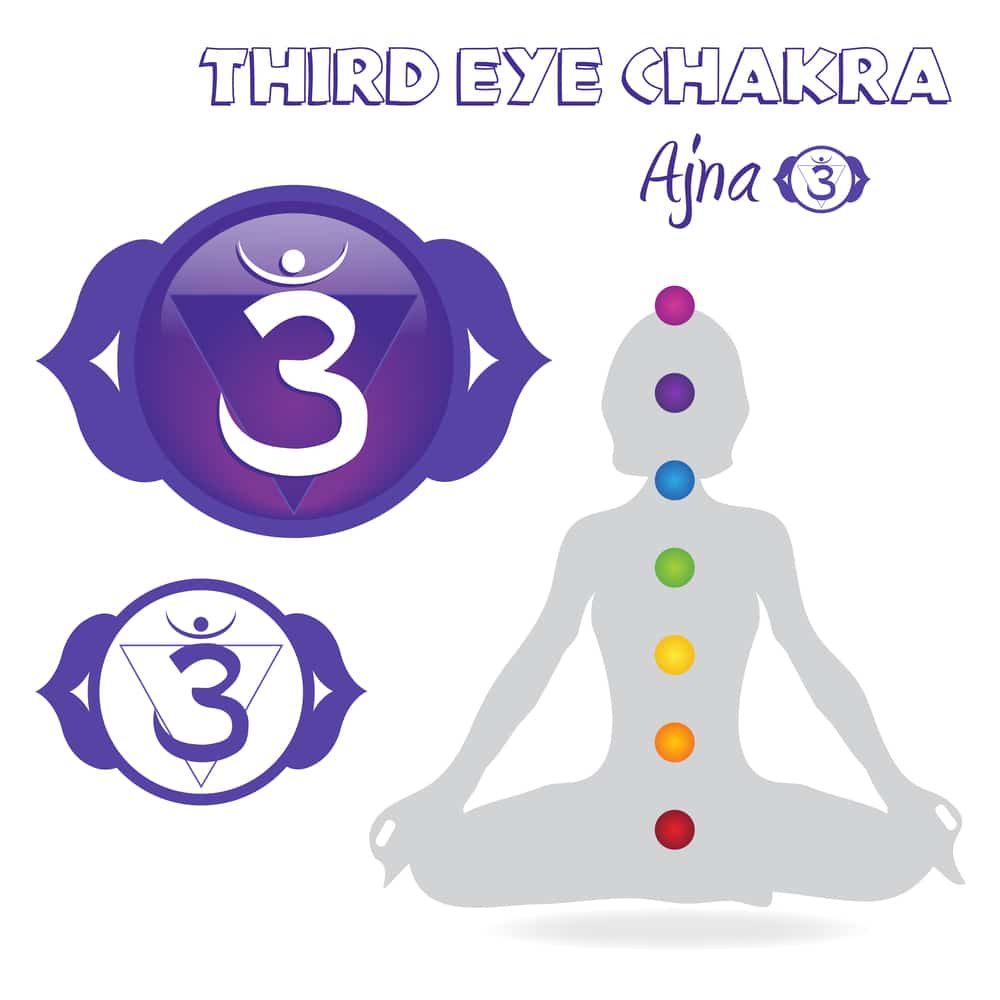
The Sixth Chakra – Third Eye Chakra: Ajna (light, archetypal identity, oriented to self-reflection)
Child Developmental Stage: Adolescence
The Basics: This chakra is known as the brow chakra or third eye center. It is related to the act of seeing, both physically and intuitively. As such it opens children’s psychic faculties and their understanding of archetypal levels. When healthy it allows children to see clearly, in effect, letting them “see the big picture.”
Signs of Deficiency in the Sixth Chakra
- Being insensitive to situations and others
- Poor vision, not able to see the future or image alternatives
- Difficulty visualizing
- Lack of imagination
- Poor memory
- Denial (unable to see what is happening)
- Rigid thinking, one way is the only way
- Inability to remember dreams
Signs of Excess in the Sixth Chakra
- Hallucinations
- Obsessions
- Delusions
- Difficulty concentrating
- Nightmares
Emotional issues related to the Sixth Chakra
- Inability to or resistance to self evaluate
- Difficulty with intellectual ability
- Feelings of inadequacy
- Close minded
- Doesn’t learn from their mistakes
- Incongruence between mental and emotional self-narratives
Health issues that may arise from Sixth Chakra imbalances
- Headaches
- Brain tumors, hemorrhage
- Stroke
- Neurological disturbances
- Blindness and deafness
- Full spinal difficulties
- Learning disabilities
- Seizures
How Parents Can Support the Sixth Chakra in their Child
1. Support identity formation.
Your adolescent is now searching for his own identity. This is not a time to become controlling over details that are not of direct harm, such as hair, clothing, or harmless activities, such as listening to music. Respect his expression of individuality. Encourage his own thinking by asking questions rather than giving answers. Instead of telling him what you did when you were his age, ask what he might tell his son if he were a father.
The roles he tries on will change many times before he settles into his adult identity. Don’t worry about the ones you don’t like. To strongly oppose it strengthens the likelihood that it will last longer.
2. Support independence.
Allow your child to have more of his own life. Encourage ways he can earn his own money, take responsibility for more aspects of his life, such as buying clothes, having his own transportation, creating activities. Let him make some of his own mistakes. If he feels you believe in him, he will more likely behave responsibly.
3. Set clear boundaries.
Adolescents nevertheless must have a clear and consistent sense of limits. As they are now old enough for sophisticated reasoning, it is important to include them in the thinking behind those limits, even to the point of letting them suggest alternative ways to address these limits.
Healing Crystals to support the Third Eye Chakra
These crystals help open the third eye and reduce overwhelm.
- Celestite
- Labradorite
- Lapis Lazuli
Essential Oils to support the Third Eye Chakra
Oils that relate to clarity and wisdom are helpful here.
- Clary Sage
- Lemon
- Sandalwood

The Seventh Chakra – Crown Chakra: Sahasrara (thought, universal identity, oriented to self-knowledge)
Child Developmental Stage: 18 years and beyond
The Basics: This is the crown chakra that relates to consciousness as pure awareness. It is a person’s connection to the greater world beyond, to a timeless, spaceless place of all-knowing. When developed, the crown chakra brings knowledge, wisdom, understanding, spiritual connection, and bliss.
Signs of Deficiency in the Seventh Chakra
- Learning Difficulties
- Rigid Belief Systems
- Apathy
- Spiritual Cynicism
- Overly focused on materialism, greed and power over others
- Excess focus on first three chakra issues
Signs of Excess in the Seventh Chakra
- Intellectualizes
- Spiritual addictions
- Confusion
- Dissociation from self and body
- Inability to stay present
Emotional issues related to the Seventh Chakra
- Inability to trust the life process
- Disruption in values and ethics
- Detachment from humanitarian issues
- Inability to see the larger picture
- Lack of faith
- Loss of purpose and meaning in their life
Health issues that may arise from Seventh Chakra imbalances
- Extreme sensitivity to light, sound and other environmental factors
- Spiritual depression (loss of meaning in life)
- Chronic exhaustion unrelated to physical disorders
- Migraines and headaches
How Parents Can Support the Seventh Chakra in their Child
Seventh Chakra modeling actually occurs throughout childhood. By the time your son or daughter is truly at the seventh chakra stage, they are on their own and your influence will be minimal. But here’s some general principles to practice beforehand:
1. Stimulate questioning.
Ask don’t tell. If your home is a safe place to question and discuss values, your child will learn to think for herself. If she is taught to think through her own problems, with support, learning that there may be many answers to a single situation, she will be more open minded. Involving her in intellectual discussions and asking for her opinion makes her feel that her thought processes are worthwhile.
2. Offer spiritual variety.
Spirituality should not be forced on your child. It is better instituted by modeling conscious behavior, and sharing what you can as there is interest. In addition to exposing your child to whatever religion you practice, you can make their spirituality even more solid by giving them some exposure to other religions as well. Explain why your family has chosen the religion you practice. Allow your child to research other cultures and styles of worship. If your religion is best for her, she will come back to it on her own, more solid in her commitment because she’s been offered choice. If she chooses another that she finds more fulfilling, it will be an informed choice, rather than a rebellious act.
3. Provide opportunities for education.
Learning is the way we feed our seventh chakra and keep our operating system up-to-date. Support learning in whatever way you can, whether it’s attending local community college, weekend workshops, a trek to the Himalayas, or a self-imposed course of study. Teach your child to find the lessons in experience. Ask what she’s learning from different activities.
4. Let go.
When it’s time for your young adult to leave home, support and celebrate their independence. It doesn’t help to hang to her on nor does it help to push her out the door. As the parent withdraws control and attachment, the young person will naturally gravitate out into her own world.
As children grow up through the chakras, they don’t immediately outgrow the needs of the previous chakra. Children need physical affection all through life, not just in the first and second chakras. They need continual approval for their self-esteem. They need to be talked to, engaged with, included in family life and activities.
Children need love and attention, time and approval. They need to be encouraged, not discouraged. They need to be part of adult society, and they need their individuality to reform that society in ways that are in better harmony with the body, soul, and spirit. Children are the sacred beings of the future. They are the hope of humankind.
Healing Crystals to support the Crown Chakra
The colors generally associated with the crown chakra are white and purple. All these stones are bright with light and powerful to keep nearby:
- Clear Quartz
- Moonstone
- Amethyst
Essential Oils to support the Crown Chakra
These oils encourage detachment from the visible world and support connection to what is higher.
- Cedarwood
- Helichrysum
- Lime
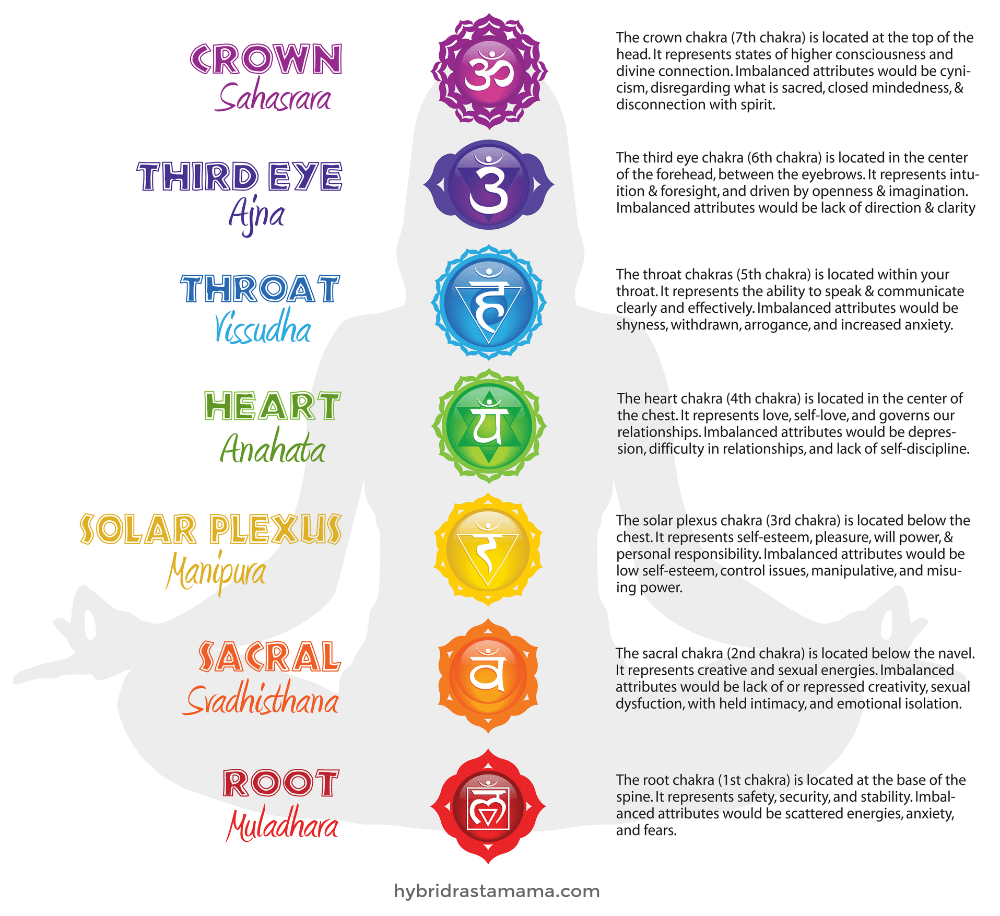
Books About Chakras For Kids
These are a few fun and well written & illustrated books about chakras for children.


Grab My Chakras For Children Printable Coloring Pages!
You don’t have to do anything fancy. No signing up for anything. Just click here and download your printable chakra coloring book.

Lauren says
Well written and super informative! 🙂
Jess says
WOW…
Zoie @ TouchstoneZ says
aMAZing post, Jennifer! Truly! I can’t wait to read the rest of this series. I’ve always loved this concept. I’ve felt I could literally see them inhabit the chakras as they grow and develop. I was just thinking about it yesterday when I was watching the expressivenss of my 15 month old’s feet.
Alicia C. says
Thank you for choosing to help decipher this information! I’ve been extremely interested in CHakras for both myself and my children for quite a while. But, whenever I try to learn, I just get more confused and sometimes bored. This post is perfect and I look forward to the next one.
(While I’d love to have all of the info in one place, I think this is better. Mommies only have so much time to devote to any particular post and breaking this up will make it easier for me to make sure I get all of the info!)
FabulousMamaChronicles says
I’m so glad that you’re writing about this! I have been reading Steiner’s philosophies and have always been interested in Chakra healing myself and being able to have the info all laid out like so fore reference will come in handy! Awesomsauce!
amymccarty1985 says
This is beautiful!! I saved this link so I can go further into it someday when i get time. I am VERY glad to see more and more people understanding our energies and using them for the better and for healing. 😀 This is very important in my family and I want to pass this knowledge to my daughter as well.